Efficiency is the foundation of sustainable digital operations.
Turning complexity into measurable savings.
Cost Optimization makes IT ecosystems more efficient by reducing waste, leveraging real-time insights, and enabling data-driven planning to cut costs and improve performance.
Partners:
Spend Smarter, Operate Leaner, Perform Better
Cost Optimization helps organizations understand infrastructure use, eliminate inefficiencies, and prevent costly disruptions. By aligning performance with business needs, teams cut Opex, avoid overprovisioning, and save on IT and network operations.
The Point
In today's challenging economic climate, it's essential to optimize operational costs. Organizations need to maximize infrastructure utilization, reduce downtime, and base their decisions on precise, real-time data. Cost optimization transforms visibility into tangible savings.
The Now
Businesses shift from outdated tools to integrated platforms that show resource use. Using bandwidth assessments, automation, and analytics, they find compression opportunities, cut manual work, and reduce infrastructure costs.
The Scope
This shift improves planning, capacity management, and IT budget allocation. Accurate insights into application mix, bandwidth, and system performance help organizations right-size resources, replace costly legacy tools, and prevent OpEx escalation.

What's Next
Expect more adoption of AI forecasting, self-optimizing networks, and automated cost controls. These will analyze usage, predict needs, and keep organizations balanced between performance and cost.
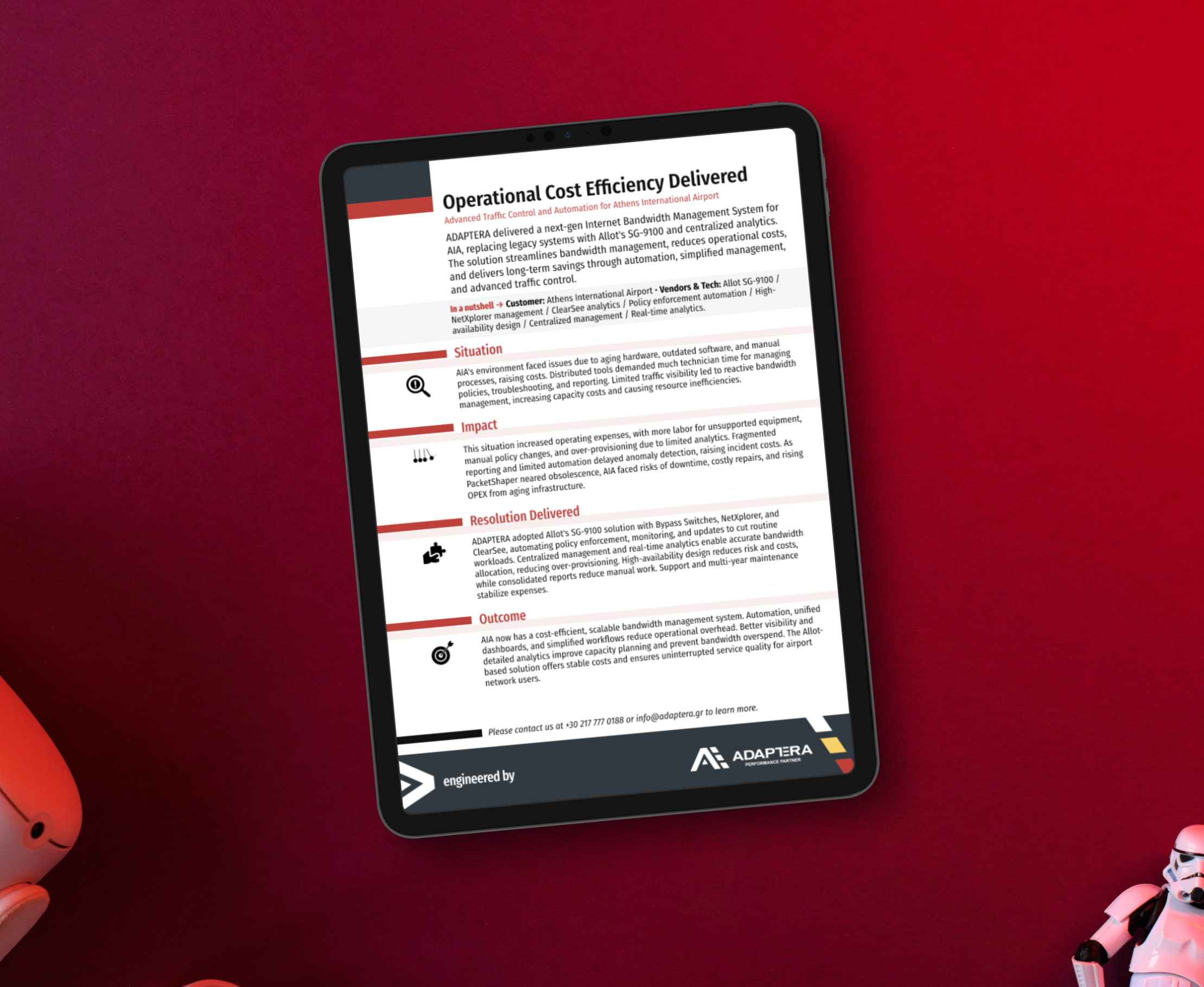
Case: Operational Cost Efficiency Delivered for AIA
Potential Use Cases
- Operational Cost Reduction (Opex): Improve network resource utilization and reduce operational expenses by identifying compression and acceleration potential and optimizing bandwidth allocation.
- Proactive Maintenance & Modernization: Reduce the risk of costly downtime and reactive troubleshooting by replacing end-of-life or fragmented monitoring systems with integrated, real-time platforms.
- Data-Driven Infrastructure Planning: Enable informed investment decisions with accurate insights on bandwidth consumption, application mix, and performance.
- Replacement of Legacy, Cost-Intensive Platforms: Retire outdated packet shaping or visibility tools and replace them with modern, more efficient solutions.